Data comparison
BPC-157 vs TB-500: data comparison
BPC-157 and TB-500 side by side: substance data, sizes and price per mg at a glance, with links to both product pages.
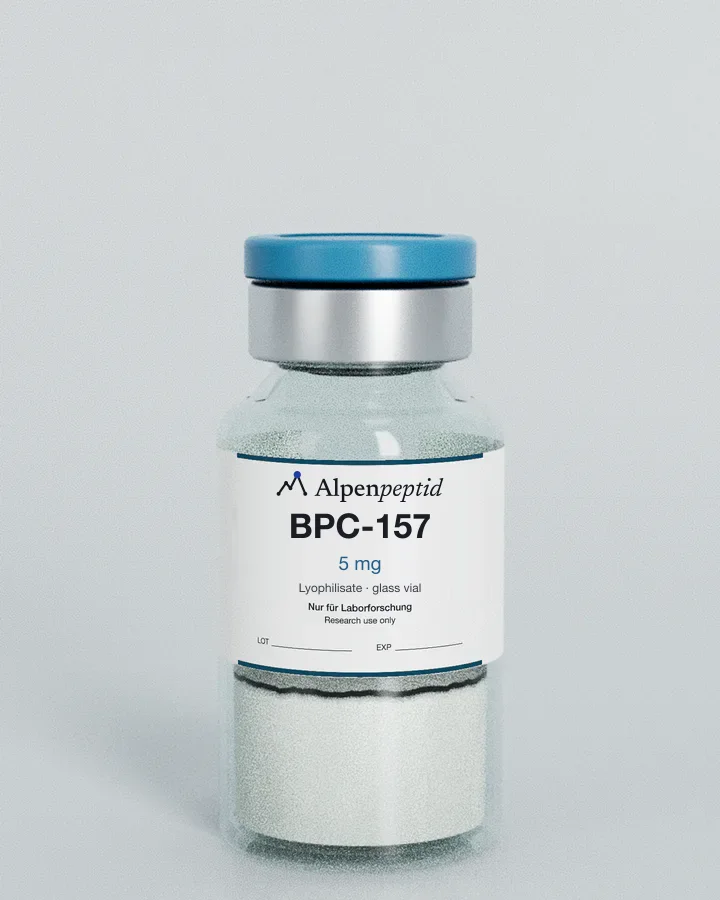
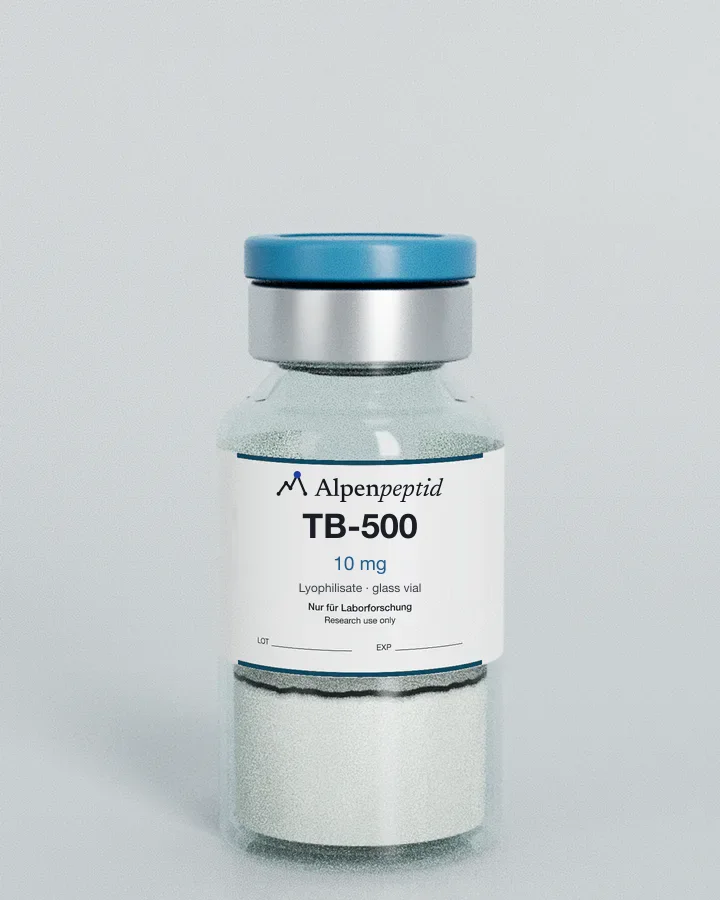
Side by side
| Property | BPC-157 | TB-500 |
|---|---|---|
| Research area | Tissue regeneration research | Tissue regeneration research |
| Form | Lyophilisate in a glass vial | Lyophilisate in a glass vial |
| Sizes | 5 mg · 10 mg | 10 mg |
| Price from | €24.99 | €32.16 |
| Lowest price per mg | €4.00 / mg | €3.22 / mg |
| Molecular formula | C62H98N16O22 | C38H68N10O14 |
| Molecular mass | 1419.5 g/mol | 889.0 g/mol |
| CAS number | 137525-51-0 | 885340-08-9 |
| Sequence | GEPPPGKPADDAGLV | Ac-Leu-Lys-Lys-Thr-Glu-Thr-Gln-OH |
| Also known as | body protection compound, bepecin | Thymosin Beta-4 |
| Earlier analysis | Purity 92%, report from 01/02/2022 | Purity 95%, report from 25/01/2022 |
| Product page | View BPC-157 | View TB-500 |
What the two have in common, and where they differ
BPC-157 is a synthetic peptide of 15 amino acids whose sequence is derived from a protein in gastric juice. TB-500 is a synthetic peptide related to thymosin beta-4 and its actin-binding region. Both are studied in preclinical tissue regeneration research and are also offered as a mix.
How to read this comparison
The table shows only data that are documented for the substance or set by the catalogue. A dash means no verified value is on file. Substance data come from PubChem where the record is unambiguous.
The price per mg is the catalogue price of the size that is cheapest per mg, divided by the declared amount on the label. It does not allow for peptide content, which is the share of peptide in the weighed material. How the two differ is explained in the article on peptide content and purity.
An earlier analysis describes a sample tested in 2021 or 2022. It is not a certificate of analysis for the lot delivered today. The certificate of the current lot is on the product page once a lot is released.
Peptide content and purity explained →
This page compares substance and catalogue data and makes no statement about effects. For laboratory research use only. Not for use in humans or animals.