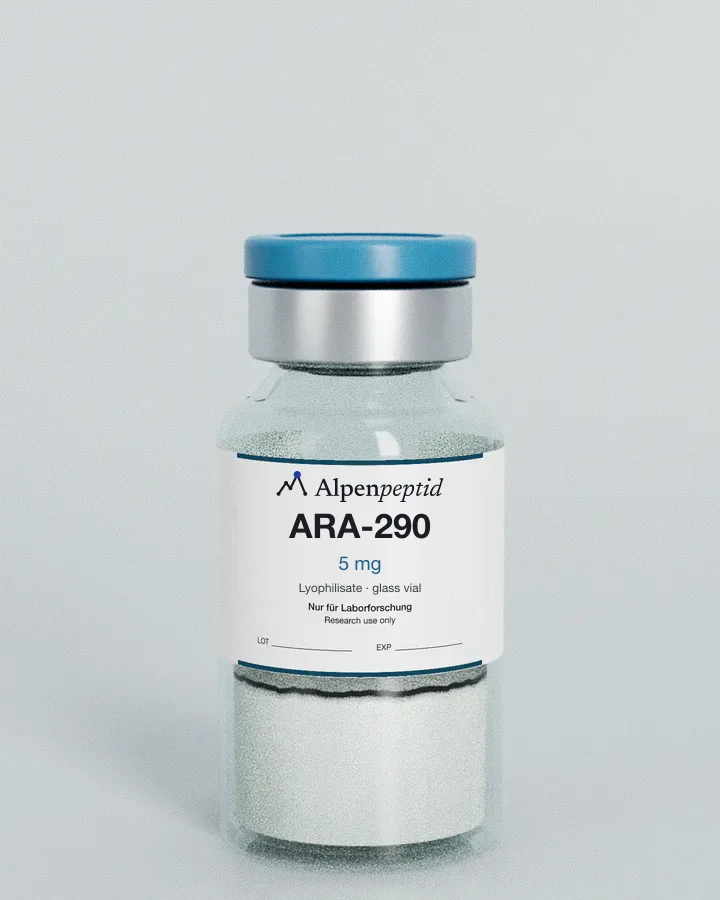
 Lyophilisate in a glass vial
Immunology and inflammation research
8 products from €23.37
Peptides for questions about immune cells and inflammatory mediators, including antimicrobial and immunoregulatory sequences. Typical uses are cell culture and in-vitro assays.
Lyophilisate in a glass vial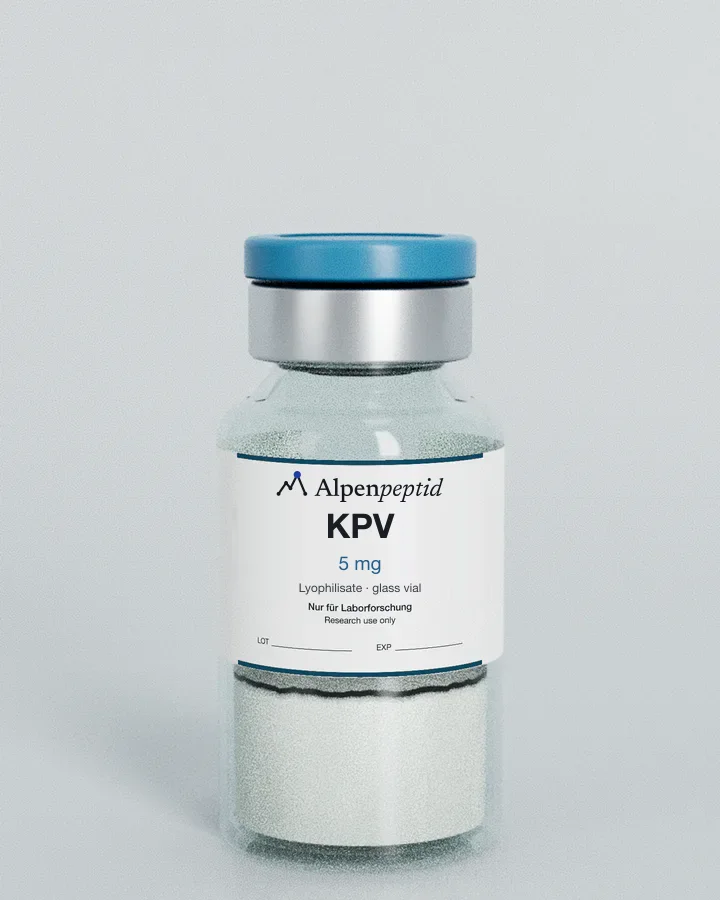 Lyophilisate in a glass vial
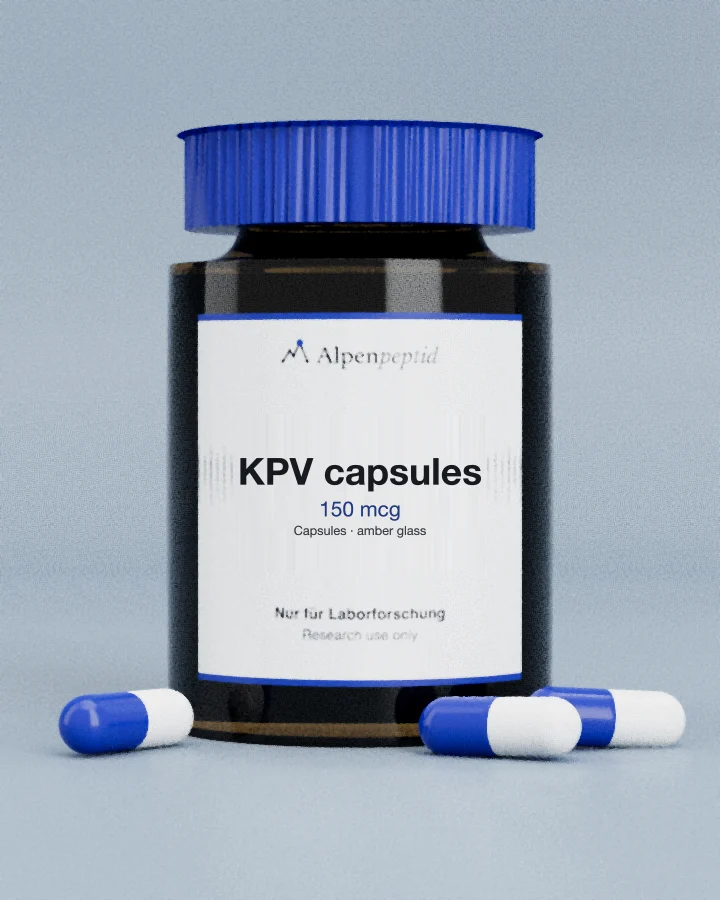 Capsules
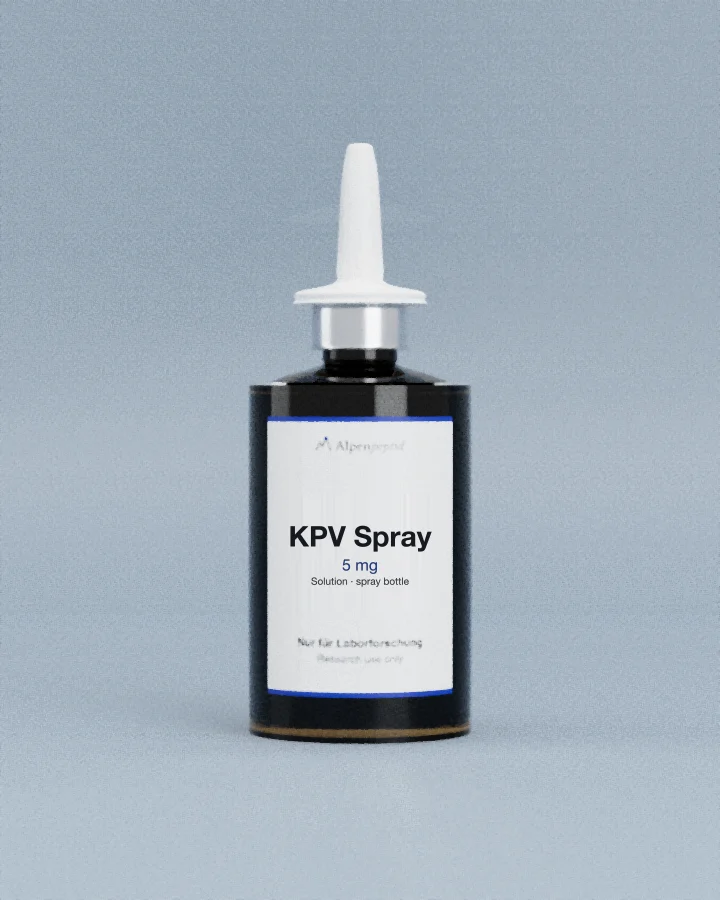 Spray bottle
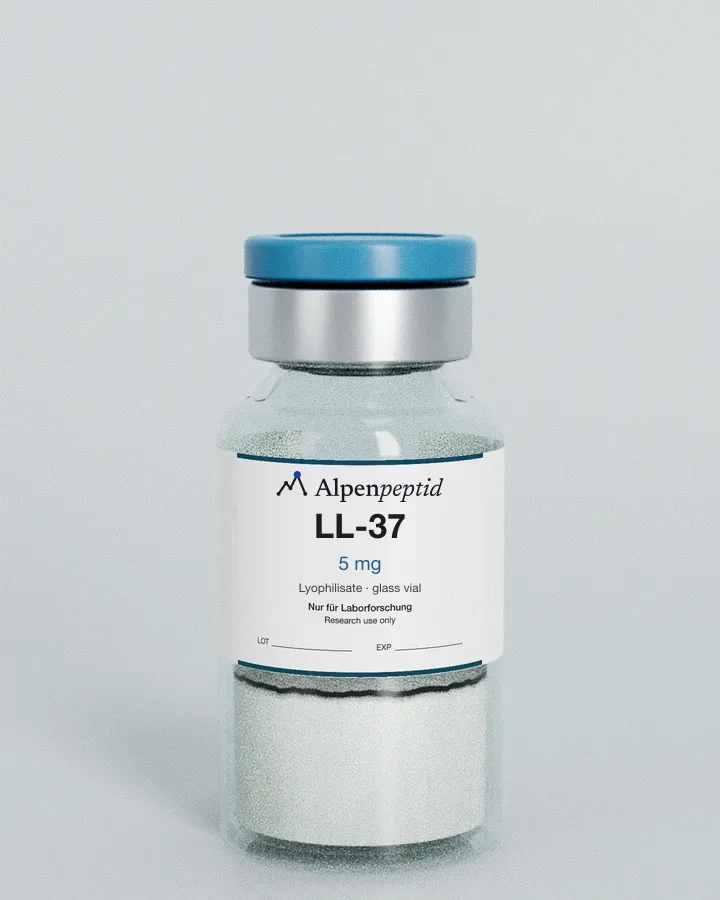 Lyophilisate in a glass vial
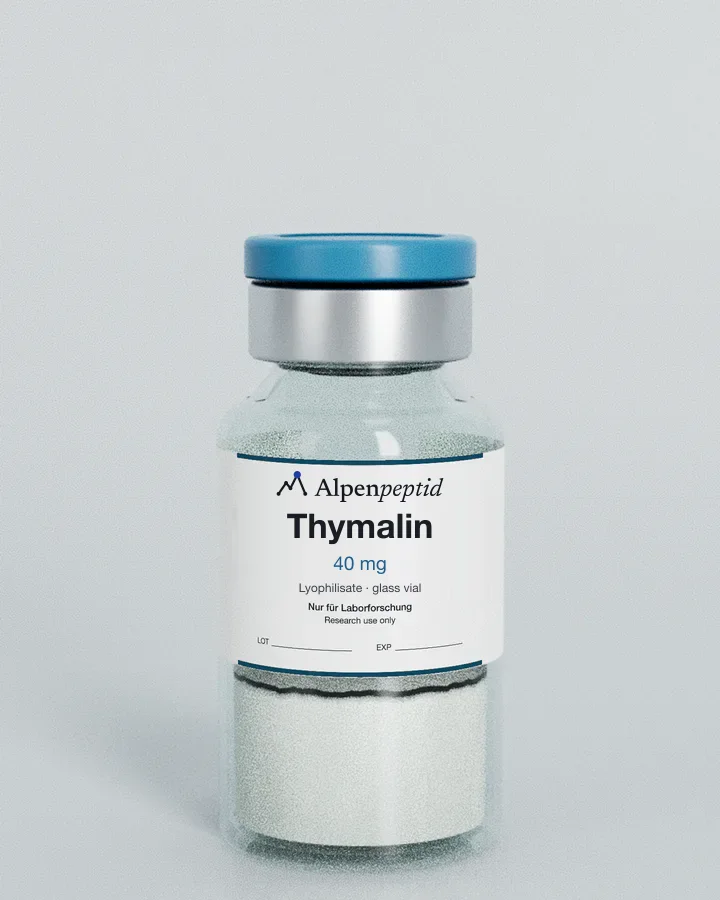 Lyophilisate in a glass vial
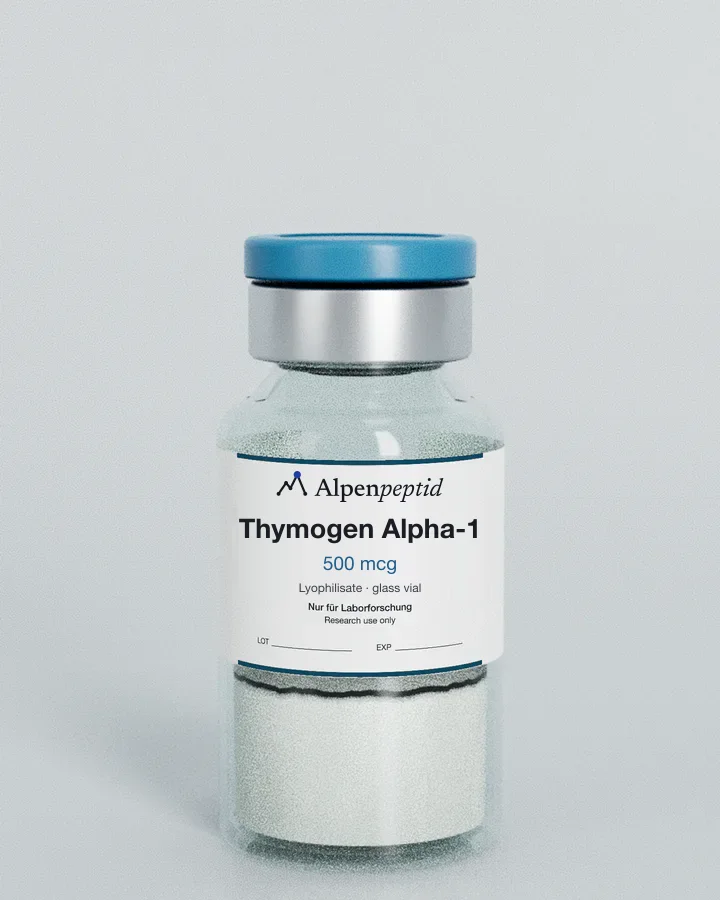 Lyophilisate in a glass vial
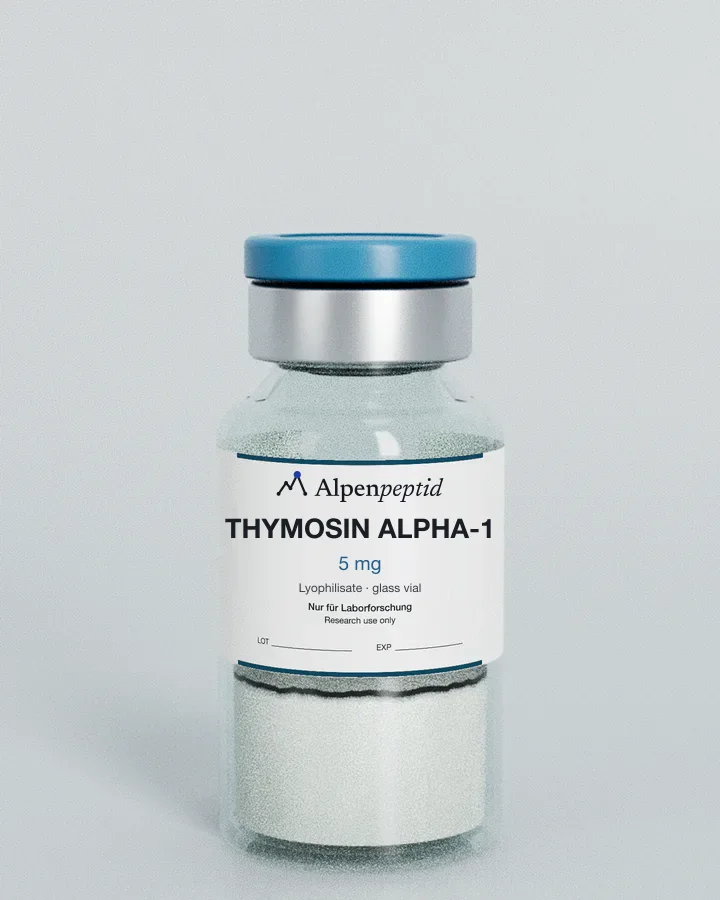 Lyophilisate in a glass vial
About Immunology and inflammation research
This research area covers peptides for questions about immune cells and inflammatory mediators. LL-37 is an antimicrobial peptide of 37 amino acids from the cathelicidin family. KPV is the tripeptide Lys-Pro-Val, the C-terminal section of α-MSH. Thymosin alpha-1 is an N-terminally acetylated peptide of 28 amino acids. ARA-290 is a peptide of eleven amino acids derived from a section of erythropoietin. Thymalin and Thymogen come from Russian bioregulator research.
For in vitro work, LL-37 is a typical example of a cationic, amphiphilic peptide. Peptides like this stick easily to plastic and glass surfaces. Low-binding tubes and sufficiently concentrated stock solutions reduce the loss. In cell culture the counterion can matter too.
KPV comes as a lyophilisate, as capsules and as a spray bottle. The other products come as a lyophilisate in a glass vial.
Comparisons and further reading
Common questions
Why does LL-37 stick to container walls?
LL-37 is positively charged and has hydrophobic sections. Both promote binding to surfaces. Low-binding tubes and higher concentrations help.
What forms are there for KPV?
Lyophilisate in a glass vial, capsules and a solution in a spray bottle. Amounts are on each product page.
Does the counterion matter in cell experiments?
It can. Trifluoroacetate can interfere at higher concentrations. The lot's certificate of analysis states which salt is present.
For laboratory research use only. Not for use in humans or animals.